
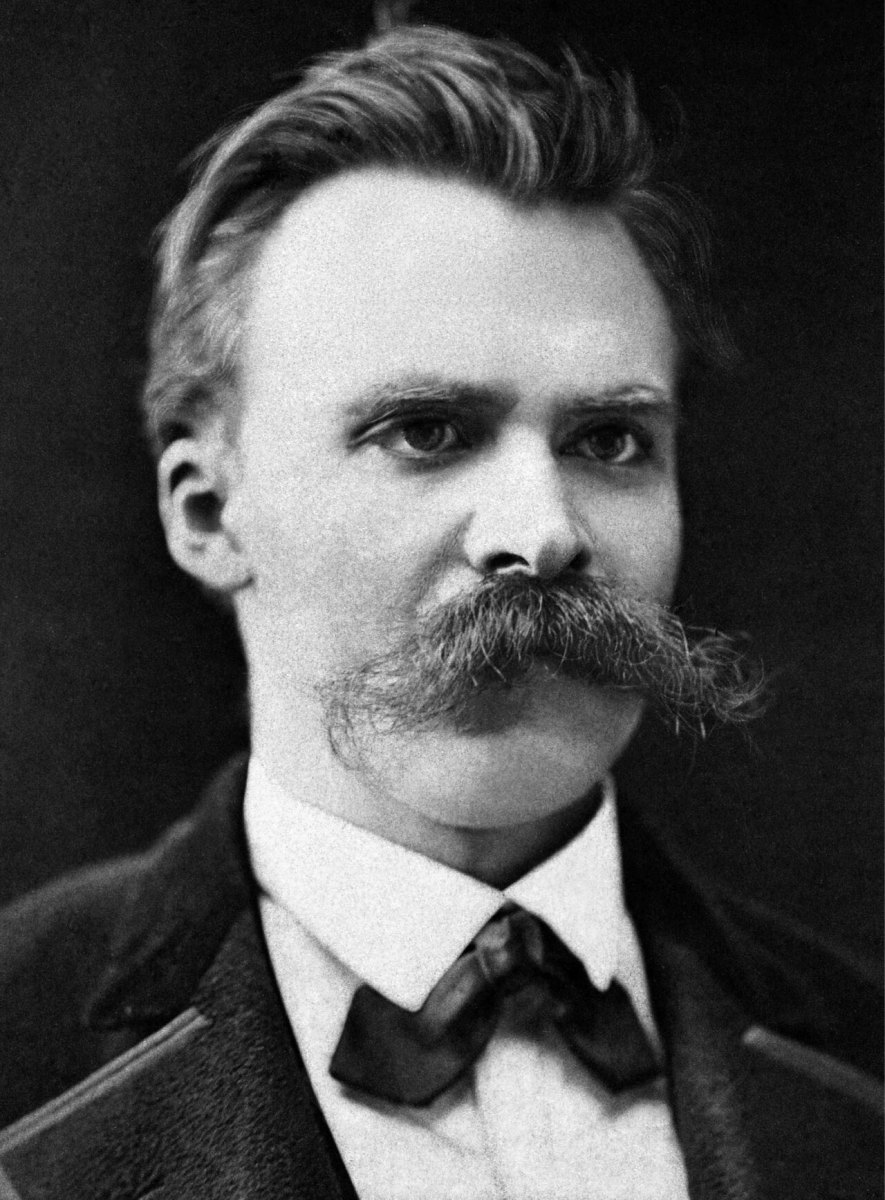
Friedrich Nietzsche
- Style
- Walrus
- Peak Era
- 1880s
- Born
- 1844
- Fan Votes
- 0 legendary · 0 meh
About Friedrich Nietzsche
Friedrich Wilhelm Nietzsche (1844–1900) was a German philosopher, philologist, and cultural critic. A prodigy, he was appointed professor of classical philology at the University of Basel at 24. Poor health forced him to resign in 1879, after which he spent a decade wandering between Swiss and Italian boarding houses, writing the works that would make him famous.
"Thus Spoke Zarathustra" (1883–1885), "Beyond Good and Evil" (1886), and "On the Genealogy of Morality" (1887) introduced ideas — the will to power, the Übermensch, eternal recurrence, the "death of God" — that reshaped philosophy, literature, and psychology. He suffered a mental collapse in Turin in 1889 and spent his last eleven years in the care of his family.
His sister later edited his unpublished notes in ways that distorted his views, a misreading scholars spent much of the 20th century correcting.
Why the Stach Became Iconic
The Nietzsche mustache is one of the largest in intellectual history: a vast, drooping curtain that completely conceals the mouth and seems to weigh down the entire face. It is simultaneously intimidating and faintly ridiculous, which is precisely the combination a philosopher of this caliber deserves.
It is routinely cited as the most philosophically significant walrus ever grown.
Notable Moments
- The Birth of Tragedy (1872)
- Thus Spoke Zarathustra (1883–1885)
- Beyond Good and Evil (1886)
- On the Genealogy of Morality (1887)
- Twilight of the Idols (1889)
- He became a full professor at Basel at age 24, before finishing his doctorate.
- He composed music throughout his life, though it was not well received.
- The line often rendered "what does not kill me makes me stronger" comes from "Twilight of the Idols."
More Legendary Staches
All Historical Legends → 97
HOF
97
HOF  96
HOF
96
HOF  91
91
 94
HOF
94
HOF 