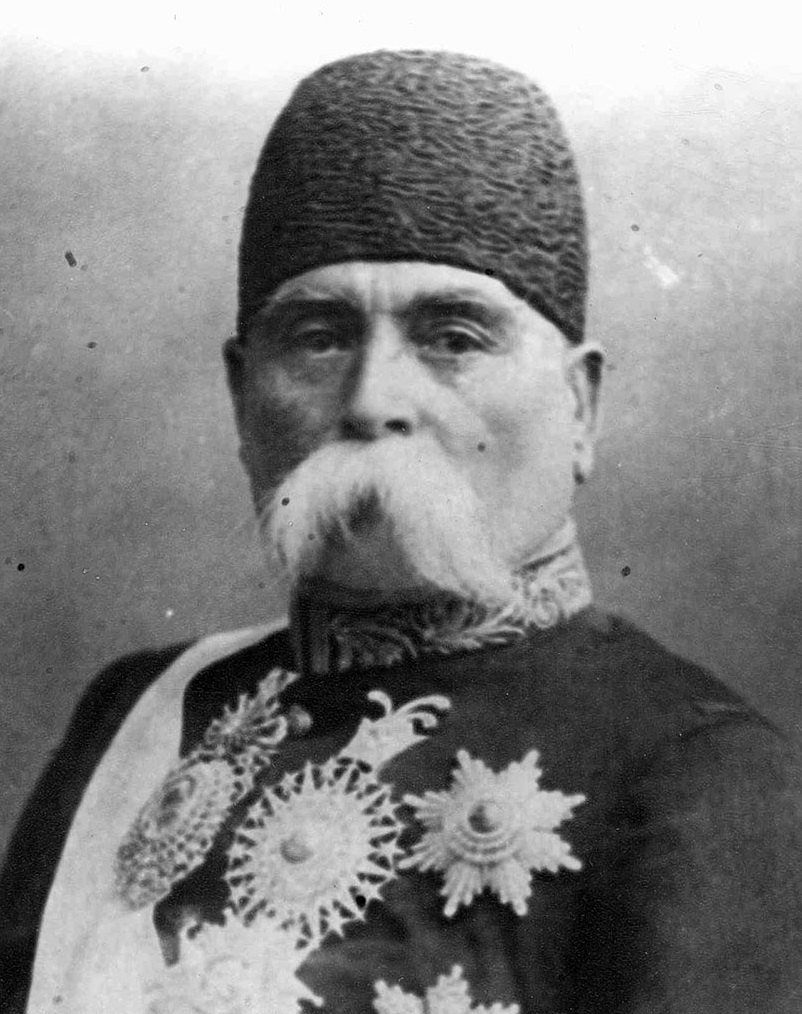
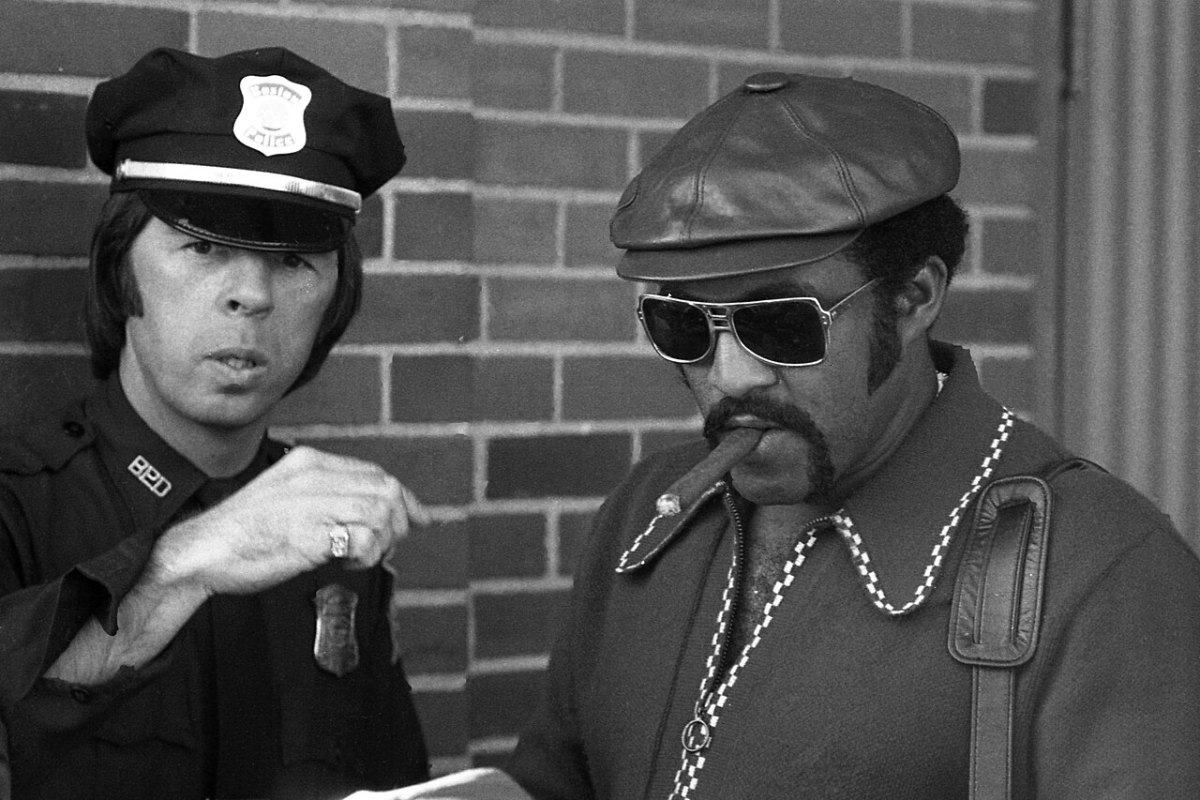



The Fu Manchu mustache style

Photo: Photo by JAB (Kallberg), via Wikimedia Commons · Public domain · via Wikimedia Commons

Mustache Style Encyclopedia

The Fu Manchu

“Thin tendrils hanging far below the chin. Hollywood invented it, and wrestling fans keep misnaming it.”

Difficulty: Hard Maintenance: Medium Best on: Oval, Oblong, Square

The Fu Manchu is a full, straight mustache on the upper lip whose ends grow into two long, thin strands that hang down past the corners of the mouth, past the chin, and sometimes much further. The key detail, and the one that separates it from the Horseshoe: t…

📌 The Fu Manchu at a Glance
Style
The Fu Manchu mustache
Difficulty
Hard
Maintenance
Medium
Best face shapes
Oval, Oblong, Square
Famous wearers
Christopher Lee, Boris Karloff, Warner Oland, Gordon Liu

About the Fu Manchu

The Fu Manchu is a full, straight mustache on the upper lip whose ends grow into two long, thin strands that hang down past the corners of the mouth, past the chin, and sometimes much further. The key detail, and the one that separates it from the Horseshoe: the tendrils hang free. They are not attached to the face by a strip of grown beard; they dangle from the corners of the lip like two lengths of cord.

It is a striking, sparse, dramatic look that takes real time to grow and real confidence to wear. It is also, in practice, rare — most people who say they have a Fu Manchu actually have a Horseshoe. MrStach's official position is that the difference matters and we will keep explaining it until the last wrestling commentator gets it right.

History of the Fu Manchu

The Fu Manchu takes its name from the fictional villain created by British author Sax Rohmer in 1913. The character was an Orientalist caricature, and it is worth saying plainly that the mustache in question is a product of Western film and pulp fiction, not of traditional Chinese grooming. In Rohmer's novels the character is actually clean-shaven; the long, drooping mustache was added by Hollywood. Actors who played the role — Warner Oland in 1929, Boris Karloff in 1932, and Christopher Lee in a series of films in the 1960s — all wore it, and the look became fixed in the public mind.

Martial-arts cinema gave the style a second home. Long, thin, white hanging mustaches adorned wise masters and villains alike, most famously Gordon Liu's Pai Mei in Kill Bill: Volume 2, a direct homage to 1970s kung fu films.

In the West, the Fu Manchu became shorthand for "menacing" and, in wrestling and rock circles, was frequently and incorrectly used to describe the Horseshoe. Today the true Fu Manchu is mostly seen in costume, competition, and on a small number of dedicated growers who have the patience to let those tendrils reach the collarbone.

Famous Fu Manchu Wearers

  1. Christopher Lee (as Fu Manchu)
  2. Boris Karloff (as Fu Manchu)
  3. Warner Oland (as Fu Manchu)
  4. Gordon Liu (as Pai Mei)

Face Shapes That Suit the Fu Manchu

OvalOblongSquare

Face-shape guidance is general. Every face is the right face for a mustache if you commit hard enough.

🌱 How to Grow the Fu Manchu

Growing a Fu Manchu

  1. Grow the full lip for 6 weeks. The body of the mustache should be full and straight, covering the upper lip from corner to corner.
  2. Shave everything else. Chin, cheeks, and the area directly below the corners of the mouth must be clean. This is what distinguishes the Fu Manchu from the Horseshoe: there is no grown strip connecting the mustache to the jaw. The tendrils will hang over bare skin.
  3. Grow the corners, and only the corners. Leave the hair at the outer corners of the lip completely untouched. These hairs need to grow very long — 10 cm to 20 cm or more — which takes 6 months to a year. Everything else on the lip can be trimmed normally.
  4. Train downward. From month 2, comb the corner hairs straight down every day, and apply a little balm or light wax to gather them into a single narrow strand on each side.
  5. Protect the tendrils. Long, thin strands break. Oil them daily and avoid wax heavy enough to make them brittle.
  6. Assess at 6 months. By then the tendrils should clear the chin. If they are stringy or sparse, that is normal; the style is deliberately thin. If they have barely reached the corners of the mouth, your growth rate may simply make this a multi-year project.

This is one of the slowest styles on the list. Plan for 8 to 12 months for a dramatic result.

✂ How to Trim the Fu Manchu

Trimming a Fu Manchu

  • Tendrils: hands off. Never cut the hanging strands except to remove a split end. Their length is the entire style.
  • Lip body. Comb down and trim the center of the mustache along the top of the lip so the mouth is clear. The body should be full but neat, similar to a Chevron. Trim the body every week.
  • Outline. Every 2 to 3 days, shave the chin, cheeks, and the skin beneath the mouth corners. Any regrowth there makes the tendrils look attached and turns the style into a scraggly Horseshoe.
  • Tendril width. Each strand should emerge from a narrow base at the corner of the lip, roughly the width of a pencil. If the base is widening into the cheek, shave it back.
  • Match lengths. Tendrils rarely grow at the same rate. Measure each from the corner of the mouth; if wax and shaping cannot hide a difference, trim the longer one minimally.
  • Splits. Check monthly and snip only the split itself.

Trim the body dry and combed. Check the tendrils wet, when they hang straight, to compare length honestly.

🧴 Recommended Grooming Routine

Fu Manchu Care Routine

Daily

  • Wash gently; the tendrils tangle and snag, so detangle with fingers before combing.
  • Comb the body outward and the tendrils straight down with a fine-tooth comb.
  • Oil the tendrils from base to tip; they are long and exposed and dry out quickly.
  • A little balm gathers each tendril into a single strand and keeps it from fraying.

Every 2 to 3 days

  • Shave the outline cleanly so the tendrils hang over bare skin.

Weekly

  • Trim the lip body. Condition deeply.

Monthly

  • Split-end check and length comparison.

Practical note

  • Tuck the tendrils out of the way when eating soup, working with machinery, or lighting anything. They reach farther than you think.

Treat the tendrils like long hair, because that is exactly what they are.

Grooming content is educational and not medical advice.

Read More About the Fu Manchu

All Articles →
Your Turn

Rocking a Fu Manchu? Prove It.

Upload your stach, get rated on Stash Power, Ruggedness, Curl Factor and Legend Status, and collect your official Mr. Stach Card.

Put Mr. Stach in your pocket
Install the app for one-tap access.