 🏆 Hall of Fame Movie
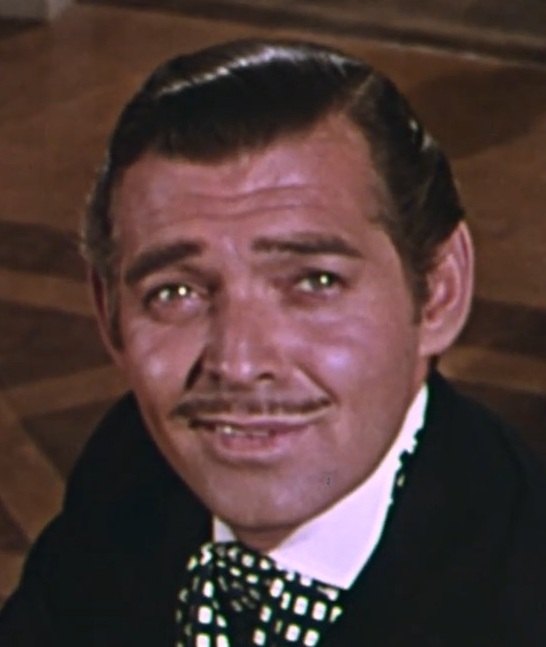
Photo: Trailer screenshot Licencing information :https://web.archive.org/web/20080321033709/http://www.sabucat.com/?pg=copyright and http://www.creativeclearance.com/guidelines.html#D2 · Public domain · via Wikimedia Commons Photo shows actor Clark Gable as Rhett Butler
Rhett Butler
Clark Gable's Charleston blockade-runner wears the pencil mustache that made Old Hollywood's leading men reach for the razor — carefully.
- Actor
- Clark Gable
- Film
- Gone with the Wind
- Year
- 1939
- Medium
- Movie
- Style
- Pencil
- Fan Votes
- 0 legendary · 0 meh
Why Rhett Butler's Mustache Matters
Clark Gable was "The King of Hollywood," and his thin, razor-edged pencil mustache was the crown. As Rhett Butler in Gone with the Wind (1939), Gable delivered the most famous exit line in cinema — "Frankly, my dear, I don't give a damn" — beneath a lip that set the standard for suave for decades.
The pencil mustache was the signature of 1930s and 1940s leading men, and Gable's was the most imitated. It is precise, dark and just wide enough to draw attention to his smile, which the film relies on heavily.
Long after the film's release, the Gable pencil mustache remains the reference point for "classic Hollywood," and Rhett Butler is its most enduring wearer.
- *Gone with the Wind* won eight competitive Academy Awards, including Best Picture; Gable was nominated for Best Actor.
- Clark Gable (1901–1960) had already won the Best Actor Oscar for *It Happened One Night* (1934).
- The film is adapted from Margaret Mitchell's 1936 novel.
- "Frankly, my dear, I don't give a damn" was voted the greatest movie line of all time by the American Film Institute in 2005.
How to Grow the Pencil
Thin, sharp, and dangerous. The mustache of leading men, jazz cats, and people who own tuxedos.
✂ Read the Style Guide