 Stach Care
 How to Grow a Walrus Mustache: The Complete Guide
Big, bushy, and draped over the lip like a curtain at a very serious theater. The walrus is the mustache of presidents and cowboys. Here is how to grow one with dignity.
The walrus is what happens when a chevron stops apologizing. It is thick, long, and heavy, draping over the top lip and often the whole mouth, with the ends dropping past the corners. It has been worn by presidents, philosophers, novelists, and Sam Elliott, which is to say it is the mustache of people who have opinions. It is also one of the most forgiving styles to grow, because the instructions are mostly "do not trim it."
What It Is and Who It Suits
A walrus covers the mouth. That is its defining feature. The hair grows long enough to hang over the top lip, sometimes hiding it entirely, and the corners extend down and out. It is bushy rather than shaped; no curls, no points, no wax sculpting.
It suits oval, square, oblong, and round faces. It adds serious weight to the center of the face, which balances strong jaws and long foreheads. If your face is small or your features are delicate, the walrus can overwhelm them; consider a chevron or hungarian instead.
Growth requirements: density and length both matter. You need hair that grows thick across the lip and long enough to hang. Thin mustaches do not walrus well; they just look untrimmed.
Growth Timeline
Weeks 1–2. Stubble. The only instruction is patience.
Weeks 3–4. Awkward stage. Hair reaches the lip and you will be tempted to trim it. For a walrus, do not. Hair in your mouth is part of the process for a few weeks. Comb down every day.
Weeks 5–8. The mustache covers the lip. Density fills in. You look like you mean it. Around week eight, do your first tidy: even the bottom edge slightly so it hangs in a smooth line rather than a ragged one, but do not shorten it.
Weeks 8+. Walrus achieved. From month three onward, it gets heavier and longer. Decide how far down you want the corners to drop (just past the mouth is classic; further is a hungarian in the making) and hold there.
Tools You Need
- A wide-tooth comb for the body, a fine-tooth for the lip line
- Sharp grooming scissors
- Mustache oil or balm; a big mustache needs conditioning
- A beard brush (boar bristle) to train the hair downward
- A straw. You will thank us.
How to Trim and Shape It
- Wash, then dry fully. Comb everything straight down.
- Look at the bottom edge. Your goal is a smooth, even curtain. Snip only the hairs that hang noticeably lower than their neighbors.
- If hair is getting into your mouth constantly and you cannot live with it, trim the very center of the lip line a fraction, leaving the sides long.
- Tidy the outer corners so they angle down and slightly out, not straight out sideways.
- Clean strays above the top edge with a trimmer, keeping the line natural.
- Put the scissors down. The walrus is about restraint.
Styling Technique
Brush down with a boar-bristle brush every morning to train the hair into a flat, downward drape. Work a few drops of oil through to keep it soft and shiny; a dry walrus looks like a broom. If the hair puffs or flares outward, a small amount of soft wax combed through the body flattens it without changing the shape. No curling, no points.
Common Mistakes
- Trimming the lip line like a chevron. A walrus covers the lip; that is the point.
- Neglecting conditioning. Long hair dries out. Oil it.
- Letting the corners go sideways. Down and out is walrus; straight out is English. Different animal.
- Trimming a ragged edge into a straight edge. Even it out gently; a ruler-straight bottom looks like a costume.
- Eating soup without a plan. Comb it up briefly, or accept your fate.
Variations Worth Knowing
A walrus can be worn full and wild, which is the Nietzsche version, or full and tidy with an evenly combed bottom edge, which is the Sam Elliott version. The "drooping" walrus lets the corners hang well below the mouth; the "boxed" walrus keeps them nearer the corners for a squarer silhouette. With a beard, the walrus blends in and becomes a beard-and-stach combination; on a clean-shaven face it stands alone and dominates. Decide early which version you want, because the combing routine differs: down for drooping, down-and-slightly-out for boxed.
Famous Wearers
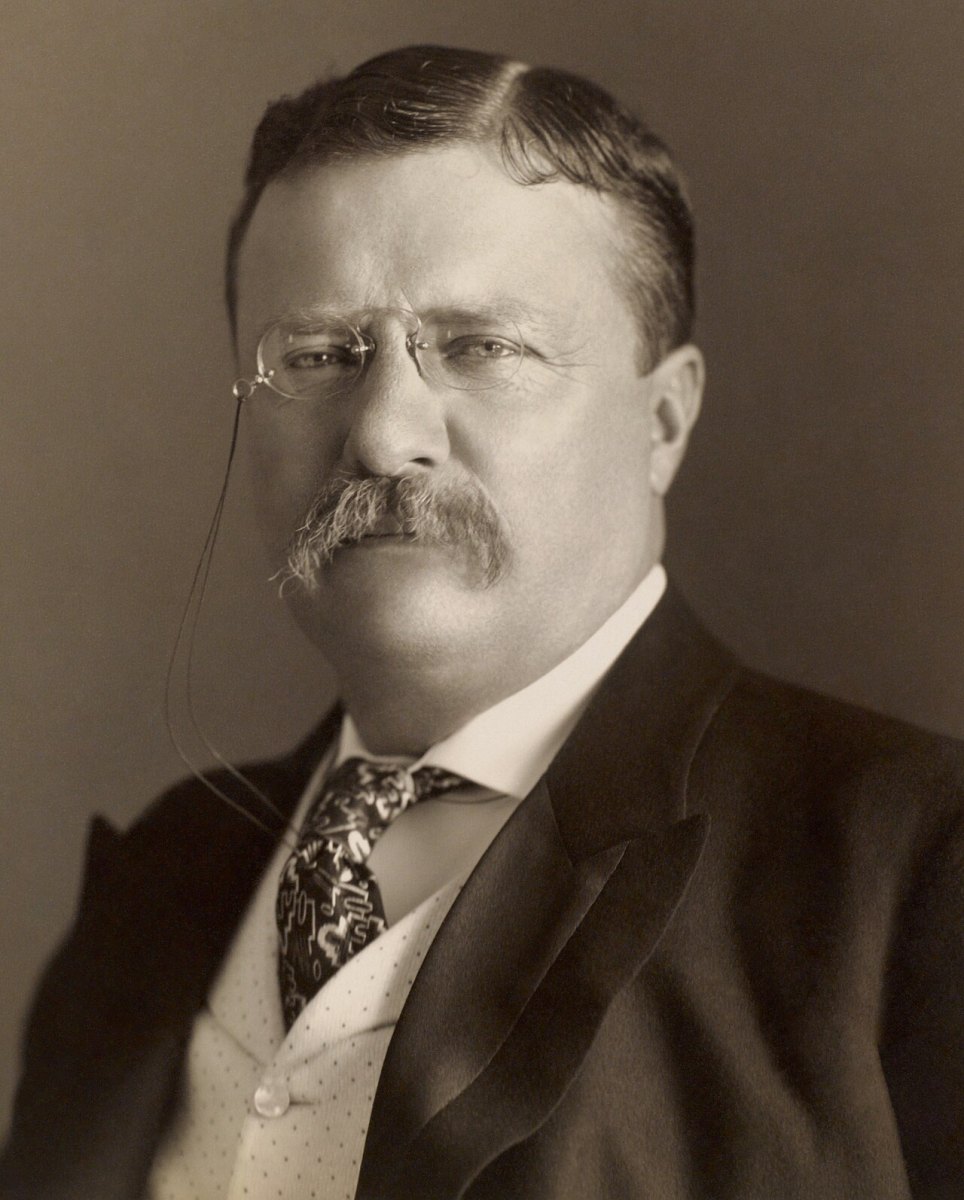
The walrus belongs to Sam Elliott, full stop. But it also belongs to Wilford Brimley, to Theodore Roosevelt, to Mark Twain, to Friedrich Nietzsche (whose walrus may be the most famous in philosophy), and to Rudyard Kipling. It is the mustache of people who have written things down.
How to Maintain It
Wash every other day and condition every time. Brush down morning and night. Oil daily. Tidy the bottom edge every two to three weeks. Trim the top edge strays weekly. Carry a comb, because a walrus after a sandwich needs attention. For a big mustache, the upkeep is moderate: it is about conditioning more than cutting.
Mr. Stach grooming content is educational and not medical advice.
Grooming content is educational and not medical advice.
Frequently Asked Questions
How long does it take to grow a walrus mustache?
About two to three months for a proper drape over the lip, and it keeps getting fuller for months afterward.
Should a walrus mustache cover the lip?
Yes. Covering the top lip is what separates a walrus from a chevron. Trim only a fraction at the very center if hair in your mouth is unbearable.
How do I keep a walrus mustache soft?
Condition it every wash, work mustache oil through daily, and brush with a boar-bristle brush. Long hair dries out faster than short hair.
What face shape suits a walrus mustache?
Oval, square, oblong, and round faces. It adds a lot of weight to the middle of the face, so smaller or delicate features may prefer a chevron.