 Mustache History
 Early Hollywood Mustaches: How the Movies Rescued the Upper Lip
After the clean-shaven 1920s, a handful of leading men put the mustache back on the map. Chaplin, Gable, Errol Flynn and the pencil-thin era that followed.
By the early 1920s the mustache was in trouble. The Victorian walrus was gone, the safety razor was in every bathroom, and the modern man was supposed to be clean-shaven. Then the movies happened, and within a decade the mustache was the most glamorous thing a man could wear on his face.
Chaplin and the toothbrush
The first great mustache of the film era was a fake. Charlie Chaplin (1889–1977) adopted the small, square toothbrush mustache for his Tramp character in 1914, reportedly because a full mustache would hide his expressions while a small one added age without obscuring the face. The Tramp became the most recognizable figure in the world, and his mustache with him.
The toothbrush style had been worn in the real world before Chaplin and remained popular in Germany and elsewhere in the 1920s and 1930s. But its association with Adolf Hitler, who wore the same style, ended its mainstream life almost completely after the Second World War. Chaplin addressed the uncomfortable resemblance directly in The Great Dictator (1940). Today the toothbrush is essentially a museum piece, which makes Chaplin's mustache both the first great Hollywood mustache and the last of its kind.
The pencil era
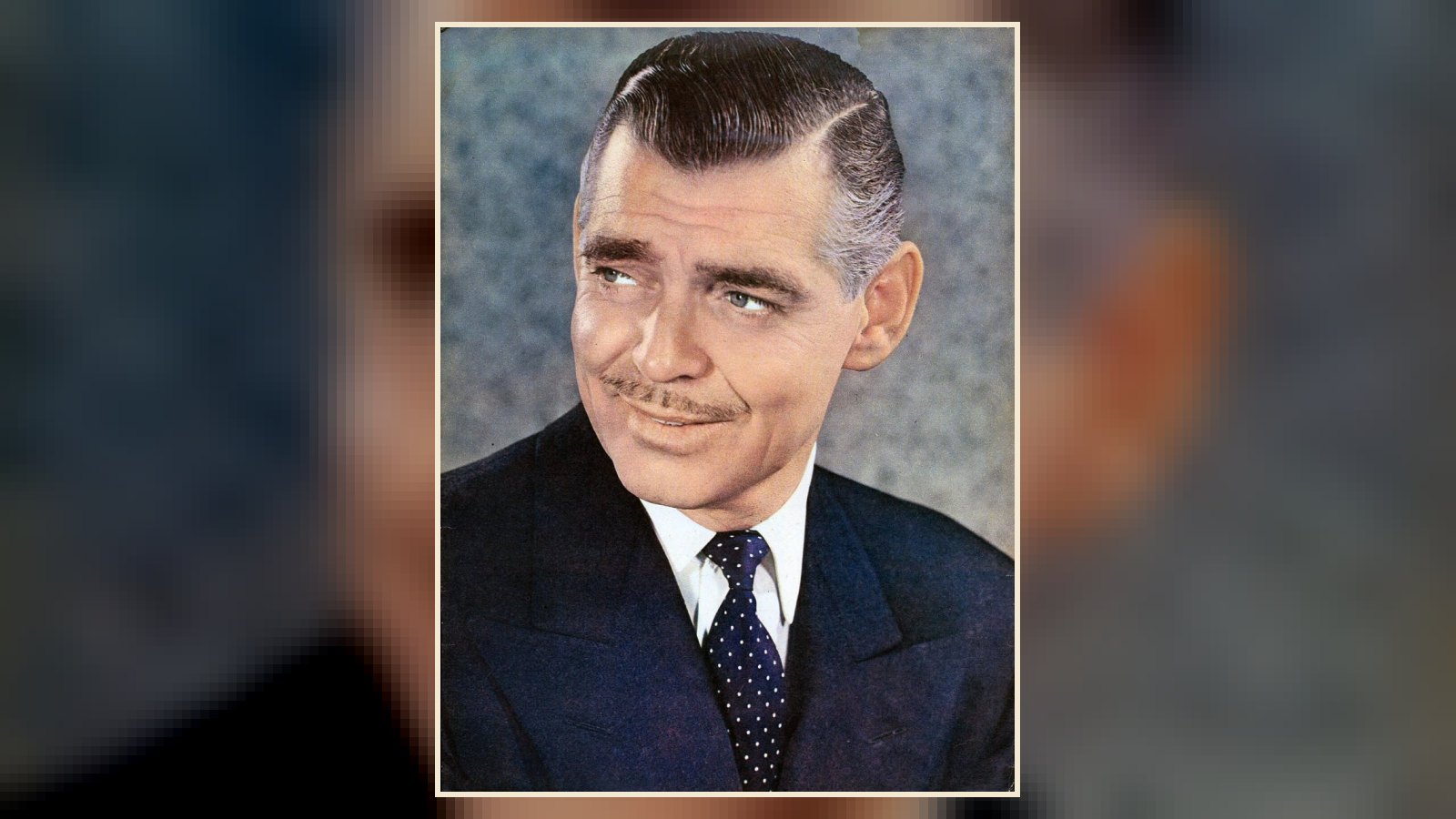
The mustache that defined the 1930s was the pencil: thin, precise, sitting just above the lip line, often shaved with a gap in the middle. It suited the sleek aesthetic of the decade and it photographed well in black and white, where a heavy mustache could read as a dark smudge.
Clark Gable (1901–1960) made it the leading man's mustache. Gable was clean-shaven in some early roles and mustached in most of the famous ones, and the thin mustache he wore as Rhett Butler in Gone with the Wind (1939) became the template for a generation. Errol Flynn wore a similar pencil through his swashbuckling films. William Powell wore one as Nick Charles in the Thin Man series. Ronald Colman wore one. Douglas Fairbanks Sr. had pioneered the look in the silent era. The pencil mustache said sophistication, wit and a certain amount of danger.
The comedians
Hollywood's funny men used the mustache just as deliberately as its romantic leads. Groucho Marx wore a greasepaint mustache, painted on rather than grown, for most of his film career, and it was so much a part of his image that he eventually grew a real one for television. Oliver Hardy wore a small toothbrush-style mustache that contributed to his fussy, put-upon persona. The comic mustache and the dashing mustache coexisted through the 1930s and 1940s, and audiences had no trouble telling them apart.
Why it worked
A few things made the early Hollywood mustache so influential. First, the movies were the dominant popular medium of the age, and millions of men saw the same faces every week. Second, studios controlled the images of their stars tightly, and a mustache was part of a carefully built persona. Third, the thin styles of the period were achievable for ordinary men with a razor and a steady hand, unlike the waxed handlebars of the Victorian era.
The result was a mustache that was modern rather than nostalgic. A man in 1935 who grew a pencil mustache was not imitating his grandfather. He was imitating Clark Gable.
The postwar fade
After the Second World War, the mustache retreated again. The war had favored clean-shaven faces, and the 1950s ideal, in America at least, was the smooth-faced organization man. Hollywood followed. The leading men of the 1950s, from Marlon Brando to James Dean to Rock Hudson, were largely clean-shaven, and the pencil mustache started to look like something from an older generation.
But the mustache had been saved once by the movies and it would be saved again. The next revival would come not from the studios but from the street, and it would be bigger, bushier and far less polite. That story belongs to the 1970s.
Frequently Asked Questions
Why did Charlie Chaplin wear a toothbrush mustache?
He reportedly chose a small mustache so it would add age to the Tramp character without hiding his facial expressions.
What mustache style did Clark Gable wear?
A thin pencil mustache, most famously as Rhett Butler in Gone with the Wind (1939).