 Military Staches
 The Pershing Mustache: The General Who Gave a Style Its Name
John J. Pershing commanded the American Expeditionary Forces in the First World War and wore a neat, clipped mustache that became a template. Here is the man and the style.
Only a handful of mustache styles are named after individuals, and most of those names are informal. The Pershing is one of the few with a clear origin: a specific general, a specific war and a specific look that was photographed so widely that it became a type.
The man
John Joseph Pershing was born in 1860 in Laclede, Missouri. He graduated from West Point in 1886 and served on the western frontier, in the Spanish-American War in Cuba, and in the Philippines. He acquired the nickname "Black Jack" from his service with the 10th Cavalry, one of the Army's Black regiments, early in his career. Pershing rose rapidly, and in 1916 he led the Punitive Expedition into Mexico in pursuit of Pancho Villa.
When the United States entered the First World War in 1917, Pershing was appointed commander of the American Expeditionary Forces. He insisted that American troops fight as a unified force under American command rather than being fed piecemeal into British and French units, a decision that shaped the American role in the war. After the Armistice in 1918 he was promoted to General of the Armies, a rank created for him. He served as Army Chief of Staff from 1921 to 1924 and died in 1948.
The mustache
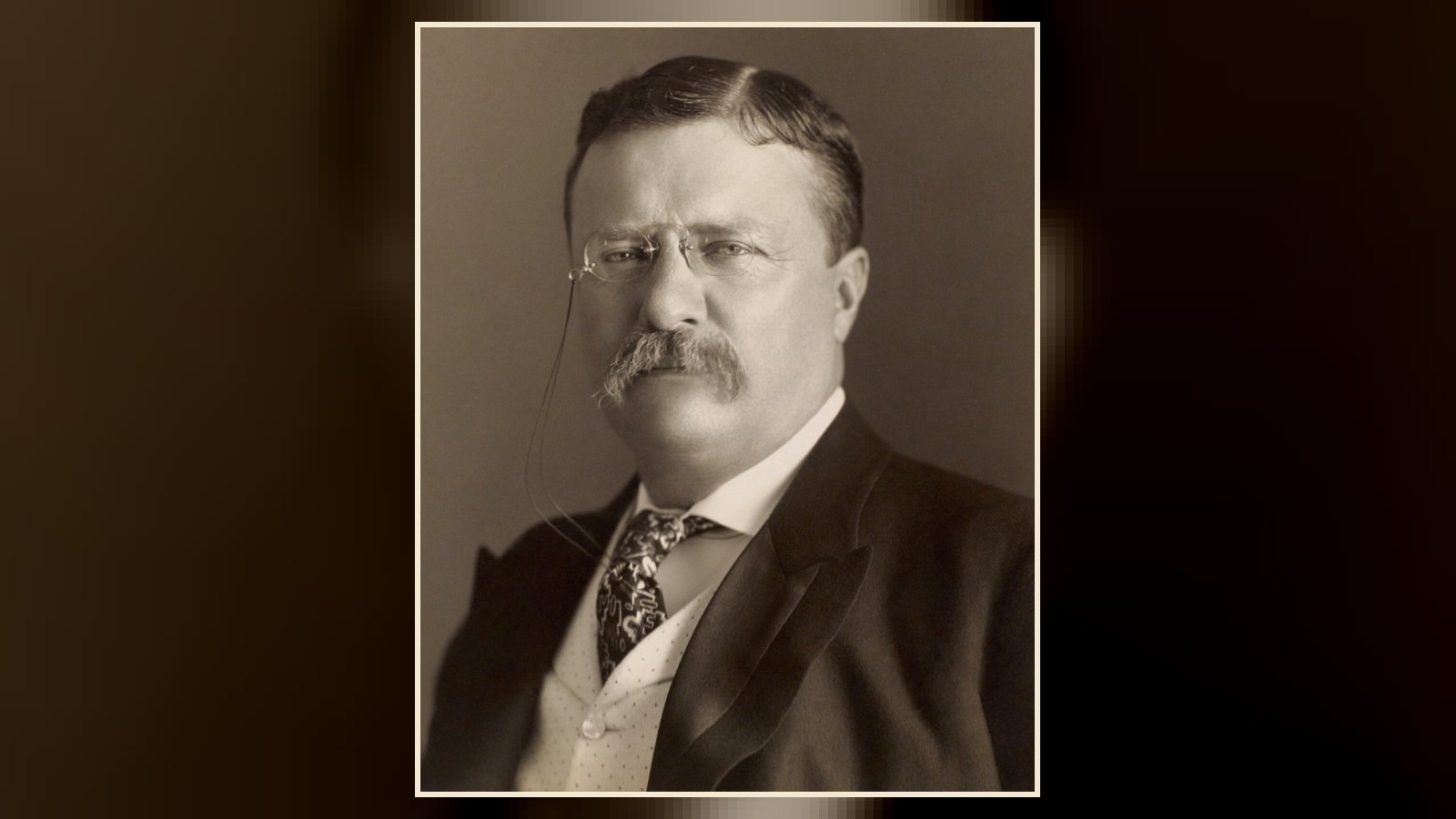
Pershing's mustache was the opposite of the Victorian display. It was short, neatly clipped, full across the upper lip but trimmed so that it did not extend past the corners of the mouth and did not hang over the lip line. In photographs it reads as a clean, dark band, precise and unfussy. It was, in other words, a regulation mustache: the kind a soldier could wear through an inspection and under a gas mask.
That was the point. Pershing was known for his exacting standards of appearance and discipline, and his mustache reflected them. It was the mustache of a man who did not have time to wax anything.
How it became a style
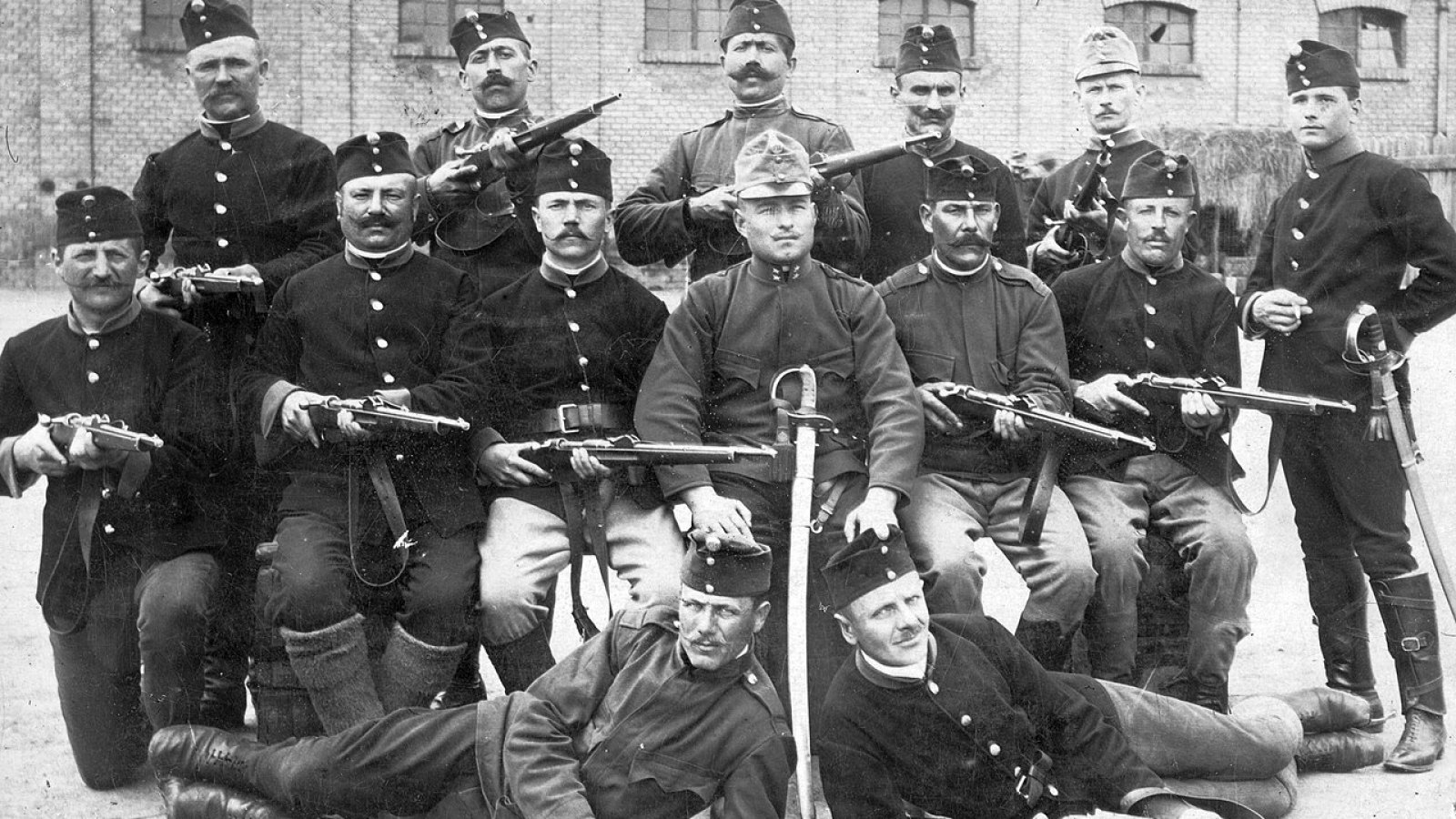
Pershing's face was everywhere in 1917 and 1918. He appeared in newspapers, newsreels, recruiting materials and official photographs, and he was, for Americans, the image of the war. Soldiers imitated him, as soldiers imitate commanders, and the neat, clipped mustache became the standard American military mustache of the era. After the war, veterans brought it home, and it remained a common civilian style through the 1920s.
When enthusiasts and barbers later needed a name for the short, full, precisely trimmed mustache that stays within the lip line and the corners of the mouth, Pershing's was the name that stuck. The style is sometimes grouped with the "military mustache" more generally, and it overlaps with what some sources call the English or the regulation mustache, but the Pershing label refers specifically to the clipped, full-but-contained look he wore.
The Pershing today
The Pershing is among the easiest mustaches to wear in a professional or uniformed setting, because it is essentially the shape that grooming standards describe. It suits men who want a mustache that is present but disciplined. It requires regular trimming to keep the edges clean and the lower line above the lip, and it benefits from a comb and a steady hand more than from any product.
It is also, for obvious reasons, one of the most common mustaches seen on service members and veterans, which gives it a lineage that few styles can match. A man wearing a Pershing is wearing, whether he knows it or not, the mustache of the American army of 1918.
A note on respect
Pershing was a complex historical figure whose career spanned frontier conflicts, colonial wars and the First World War, and historians continue to assess his record. This article is about his mustache and its influence on a style, not an endorsement of any policy or a claim on behalf of any institution. The style's name is a matter of grooming history, and that is the spirit in which we present it.
Frequently Asked Questions
What is a Pershing mustache?
A short, full, neatly clipped mustache that stays within the lip line and the corners of the mouth, named after General John J. Pershing, commander of the American Expeditionary Forces in World War I.
Who was John J. Pershing?
An American general (1860–1948) who commanded U.S. forces in the First World War and was promoted to General of the Armies in 1919.